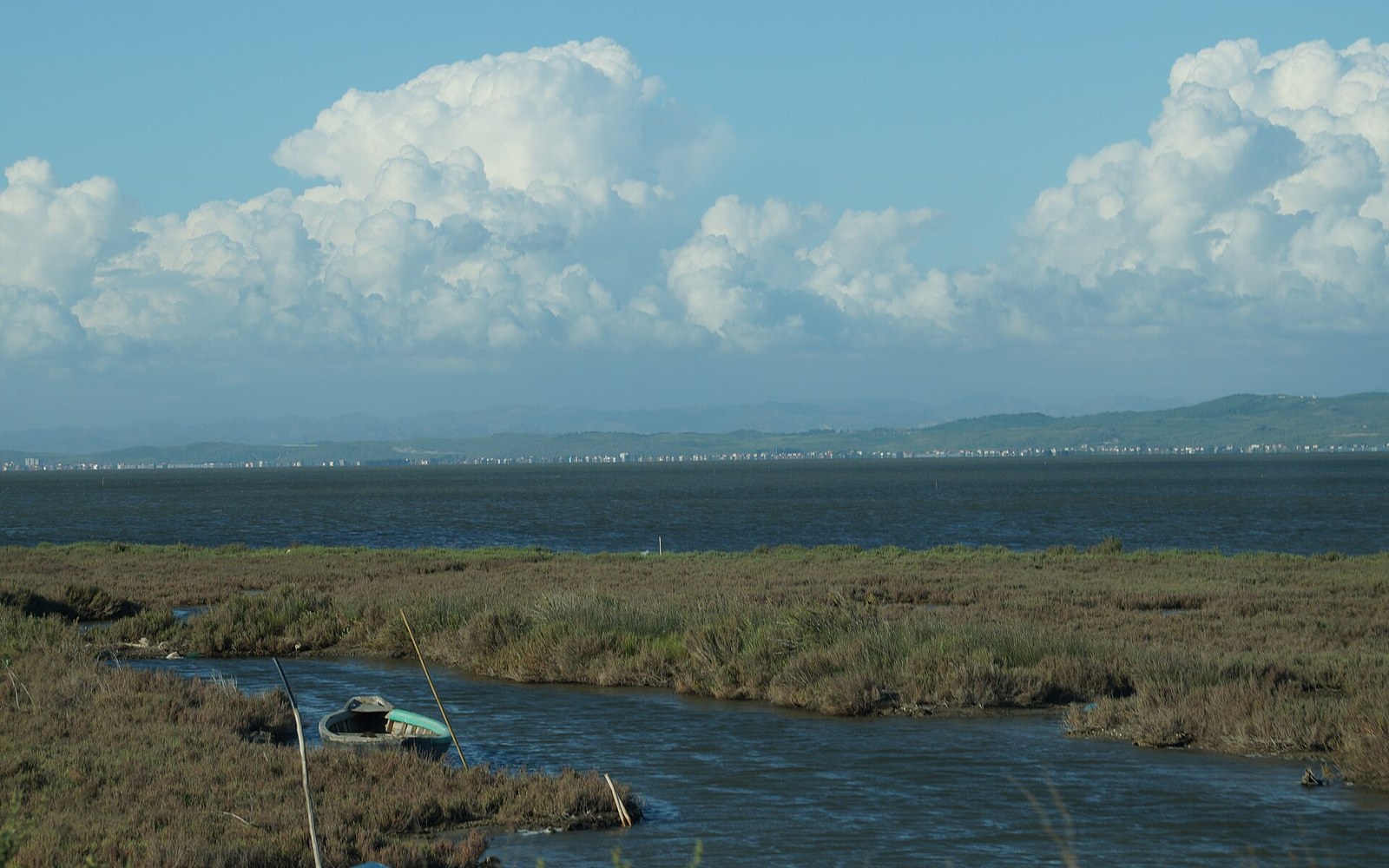
A spit is temporary
The bar that closes a lagoon off from the sea is always in motion — longshore drift builds it, and the same force will eventually undo it.
- Entry
- G.3
- Where
- The Albanian Adriatic shore
- Period
- A continuous process
- Section
- The Lagoons
01The making and unmaking of a bar
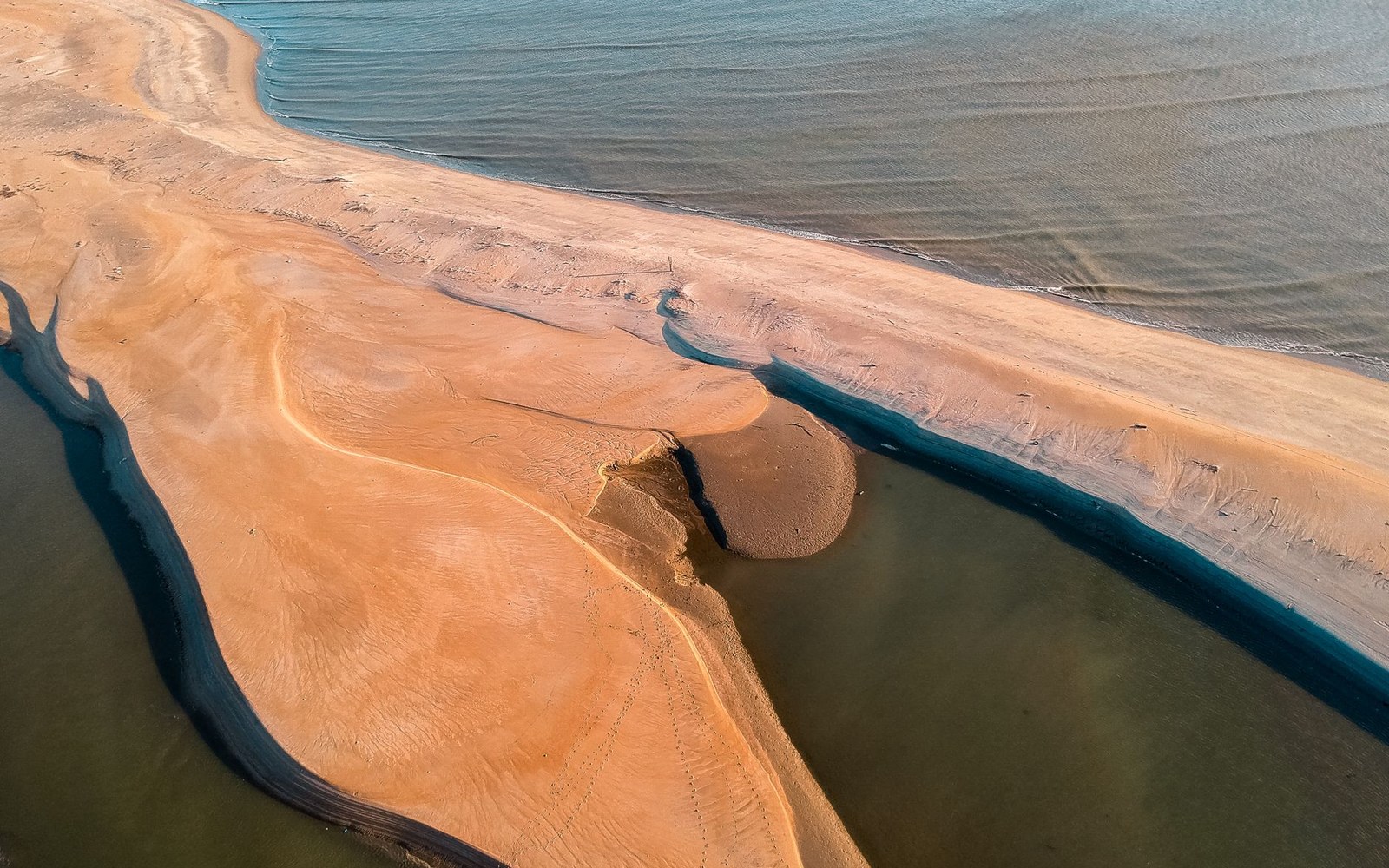
A lagoon needs an enclosure. On the Albanian coast, where rivers carry sediment from steep inland catchments and the Adriatic's dominant currents run broadly from south to north, that enclosure is almost always a sandy spit or barrier bar built by longshore drift — the slow, oblique shuffling of sand grains along a shore. Wave energy does the work: each wave strikes the beach at an angle, pushes a grain along, and the backwash pulls it seaward. Grain by grain, the accumulated result can be a spit kilometres long, thin enough to walk across in a minute but effective enough to trap a lagoon behind it.
The geometry looks stable on any human timescale, but it is not. The same drift that built the bar continues to move it. Spits migrate downdrift, curve at their tips, and are interrupted wherever a river mouth asserts itself against the current. If the river input drops — because an upstream dam catches sediment, or a catchment is grazed bare and then recovers — the balance shifts, and the sea begins to reclaim what it lent. Storm surges breach narrow bars and open new inlets that may heal or may not. Where a new inlet persists, the lagoon changes character: saltier, better flushed, different in biology.
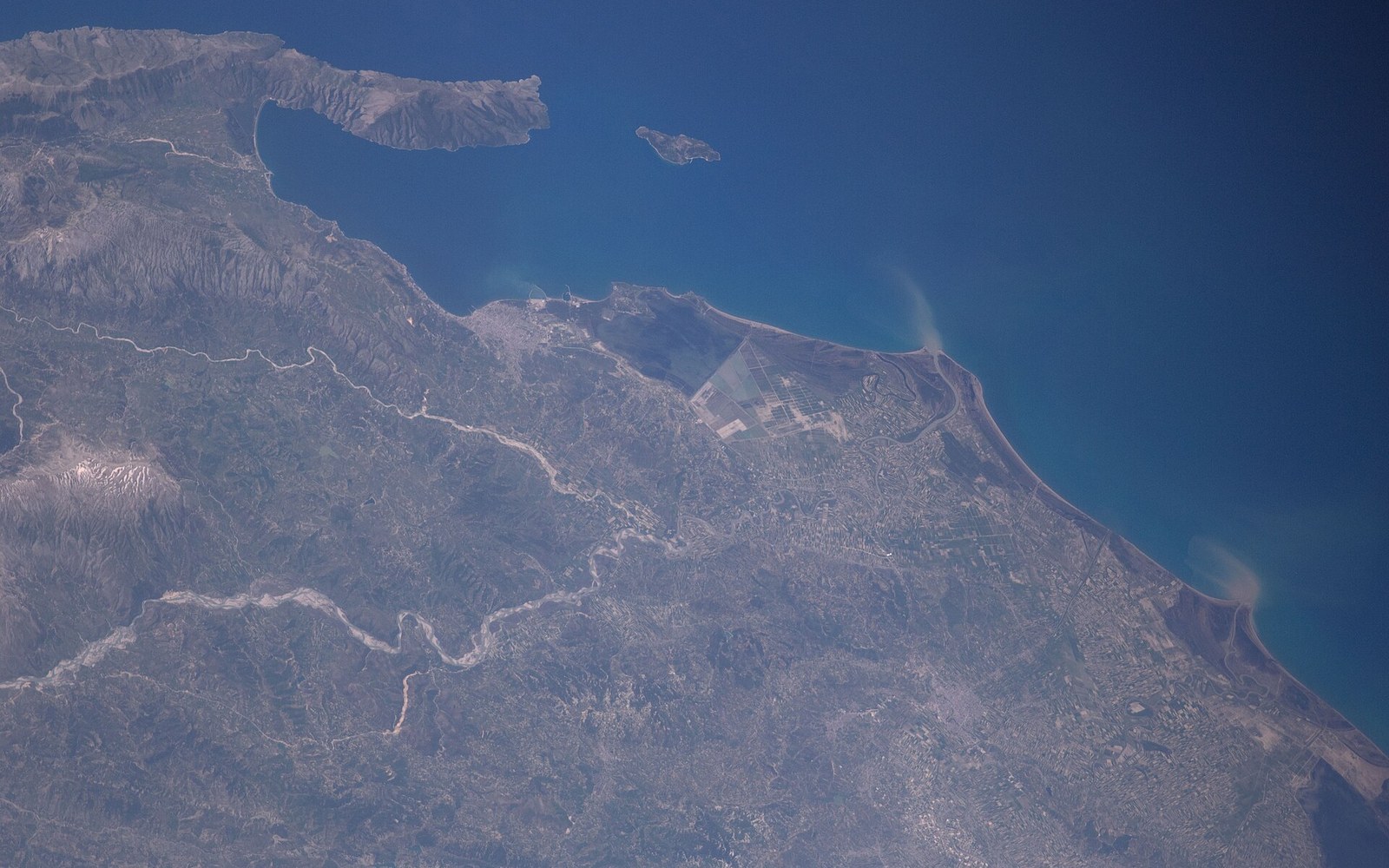
The spit at Narta sits in a comparable condition — shaped by the same drift, subject to the same arithmetic of gain and loss.
The Karavasta bar, enclosing one of the largest lagoons on the eastern Adriatic, is measurably narrower in places than surveys from a century ago recorded. The spit at Narta sits in a comparable condition — shaped by the same drift, subject to the same arithmetic of gain and loss. Neither bar is collapsing on any near horizon, but neither is fixed. They are positions in an ongoing argument between river and sea, and the sea is patient.
That impermanence is also what makes lagoonal edges productive — the constant small disturbance keeps the ecology opportunistic, and the enclosure, while it lasts, concentrates the fish and birds that have made these shores worth reading carefully.
- Longshore driftthe primary mechanism building barrier spits along this coast
- Spit migrationthe ongoing downdrift movement that makes apparent stability illusory
- Storm breachevent that opens a new inlet; may close naturally or become permanent
- Sediment budgetthe balance between river-supplied sand and wave-removed sand; shifts with land-use change upstream