The Ottoman bazaar
The commercial machinery of a market town, built to a plan that repeated from the Adriatic to the Bosphorus.
- Entry
- E.4
- Where
- Krujë, Gjirokastër, Berat
- Period
- Ottoman
- Section
- Bazaar Towns
01The plan and its parts
The Ottoman bazaar is not a chaos of stalls but an engineered system. Its core unit is the dükkan — a lock-up shopfront, typically a single vaulted bay, with a raised timber platform where the craftsman sits to work and a heavy wooden shutter that folds down at closing to become a counter. The dükkan is narrow at the street and deep enough to hold stock; its neighbours are identical. A run of them side by side, often roofed with a continuous arcade or a line of small domes, makes the çarşi — the market street that gives the whole quarter its name in both Albanian and Turkish.
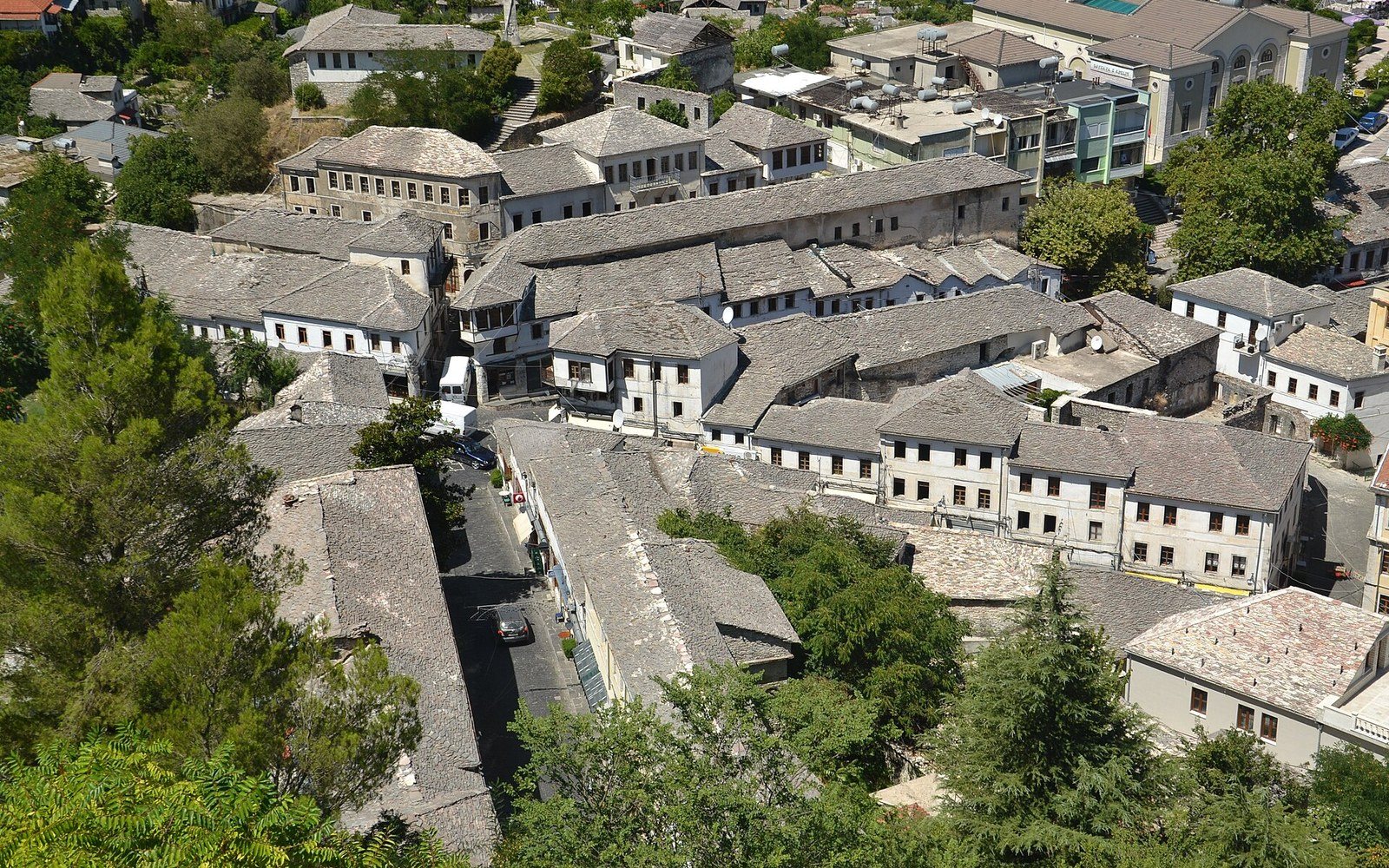
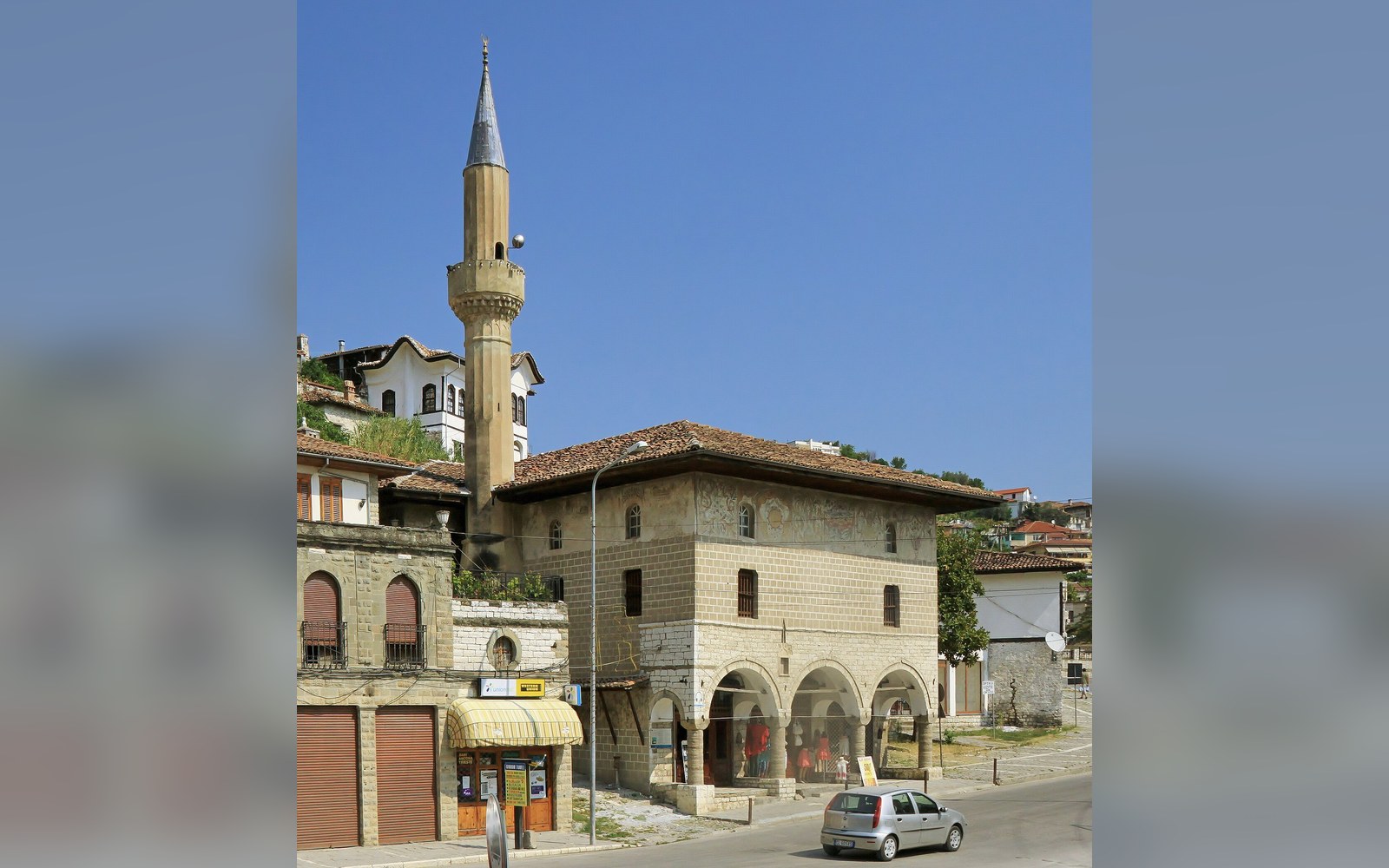
Where traffic was heavy enough, the çarşi ran under a covered hall: a bedesten, a lockable masonry structure for storing and trading higher-value goods — cloth, metalwork, leather — that needed protection both from weather and from theft. Berat has one of the better-preserved examples on the Albanian side, a rectangular building that still marks the commercial gravity of the lower town. The bazaar at Gjirokastër occupies a similar logic: a street of workshops descending the slope below the fortress, the topography itself directing trade toward the lowest defensible point.
The third component is the han — a caravanserai on a smaller, regional scale, arranged around a courtyard with stabling below and sleeping accommodation above.
The third component is the han — a caravanserai on a smaller, regional scale, arranged around a courtyard with stabling below and sleeping accommodation above. A han served the travelling merchant who needed to store goods overnight as much as it served the traveller who needed a bed. It also anchored the bazaar as a node on a longer route: goods did not only circulate locally, they arrived on mule-back from the interior and departed for the coast, or arrived by sea and moved inland along the road. The han marks where those flows paused.
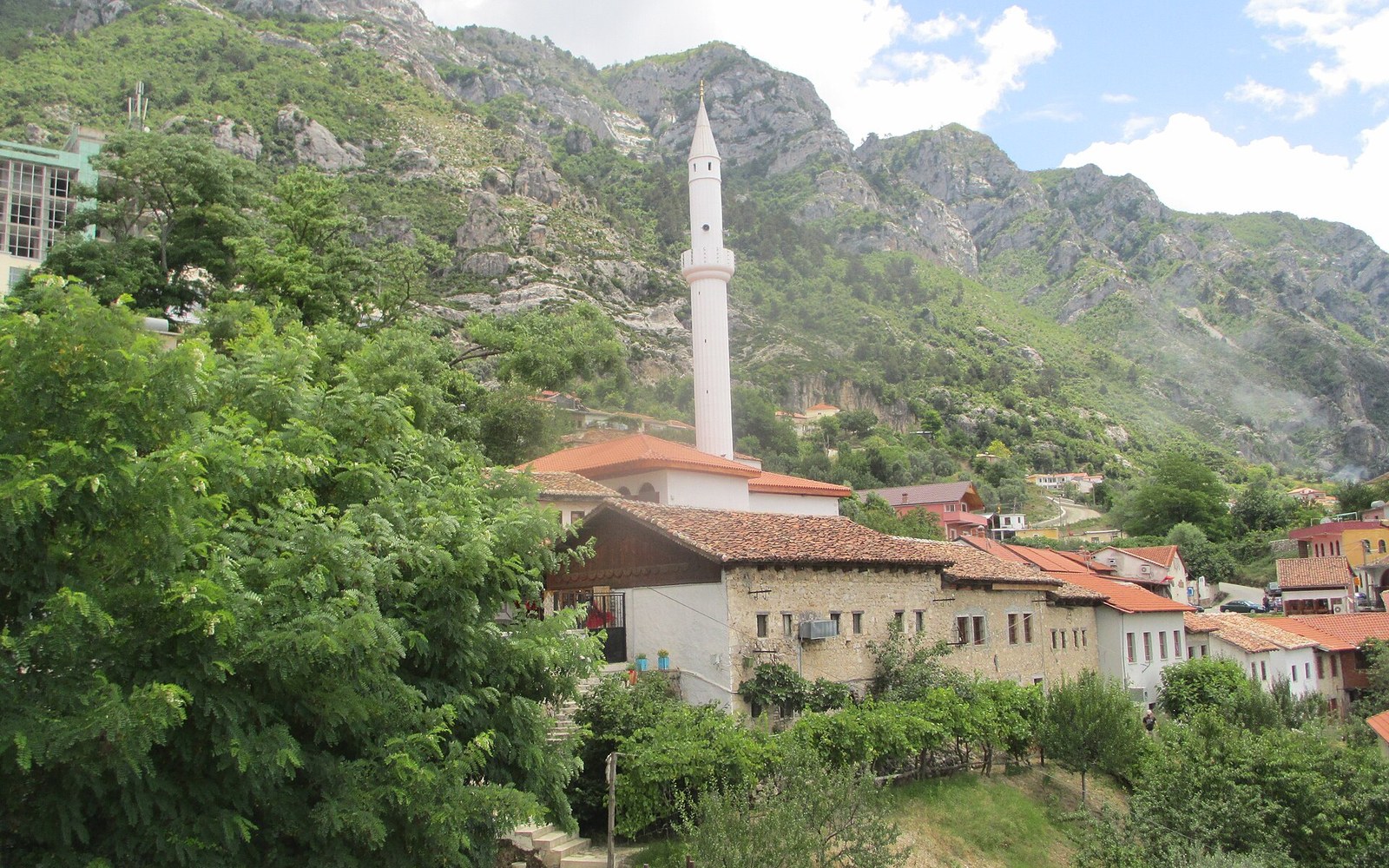
Together, dükkan, çarşi, bedesten and han produced a quarter that was self-completing: production, retail, wholesale storage and overnight lodging in a compact walk. The plan replicated because it worked — not because it was imposed uniformly, but because the same commercial pressures produced the same solutions from Shkodër to Sarajevo and beyond. On the Albanian coast, where Venetian and Ottoman building overlapped in the same towns, the bazaar quarter often abuts older fabric without apology, the two systems indifferent to each other's geometry. The commercial street at Kruja is among the most legible survivals: the workshops still occupy the original line, the timber shutters still function as counters, and the scale of the dükkan has not been rationalised away.
- dükkan
- the single-bay lock-up shopfront; the base unit of an Ottoman market
- çarşi
- the market street formed by a run of dükkan; the word used in both Albanian and Turkish
- bedesten
- a lockable masonry hall for high-value wholesale goods
- han
- a regional caravanserai: courtyard, stabling below, lodging above